PROFESSIONAL services
Crash reconstruction
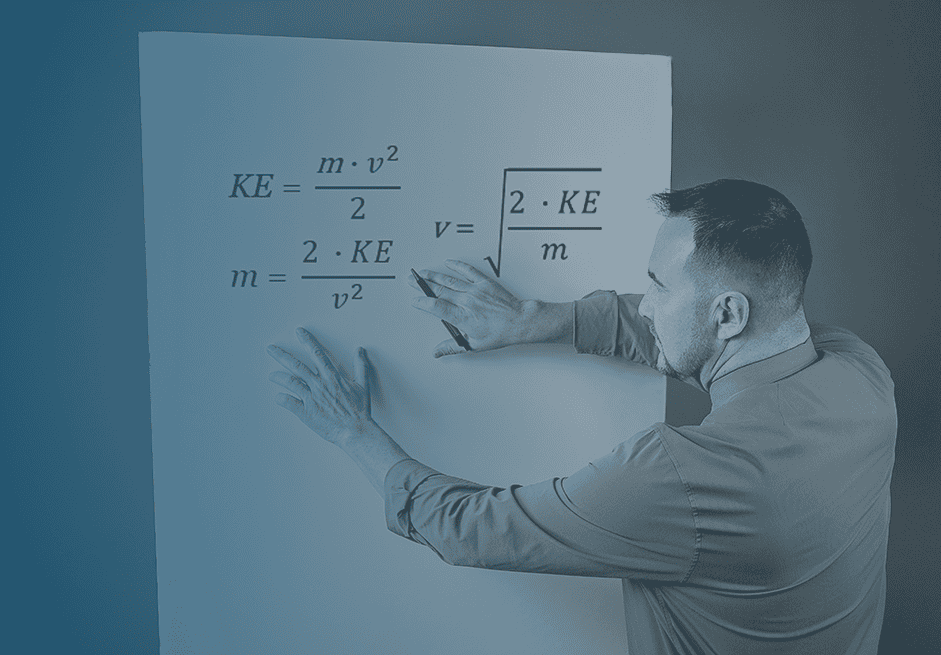
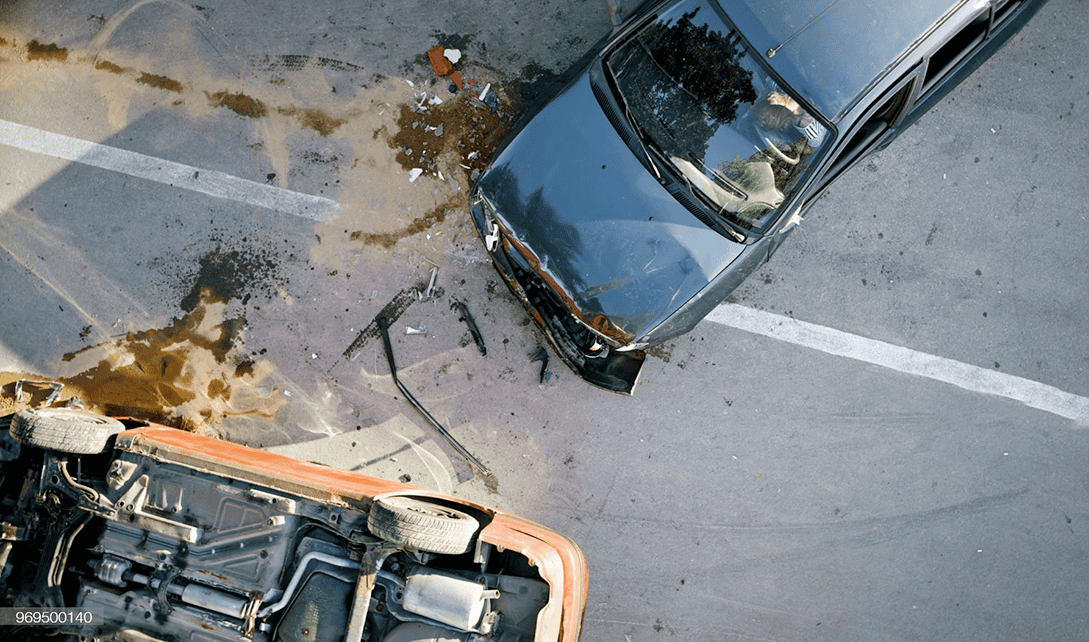
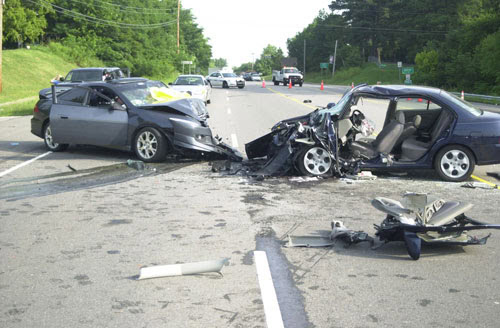
Crash reconstruction is the process of using scientific methodology to determine the circumstances, mechanics, and contributing factors associated with a collision. It requires a working knowledge of many disciplines including physics, vehicle dynamics, mathematics, photogrammetry, and computer applications. Questions relative to vehicle speed at impact, speed loss during braking, or the angle at which two objects collided, can be answered by the reconstructionist after thorough evaluation of available information, such as scene inspections, examining all of the vehicles involved in the collision, and the collecting of evidence, to include scene photographs, video of the collision, measurements of the scene, forensic evidence, eyewitness testimony, autopsy reports and legal depositions.
Having the knowledge and ability to interpret the evidence and conceptualize the event is crucial to reconstructing any crash. We have spent over 30 years investigating crashes on scene first hand, from minor collisions to multi-vehicle fatalities. At Beyond the Shield, we possess the training, experience and tools to accomplish this critical task.
Contact us here to learn more.
Forensic analysis
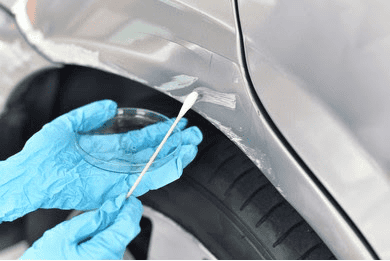
Detailed forensic analysis of the physical evidence, which can include transfer evidence and biological evidence; a pedestrian or occupant’s injuries, tire and vehicle damage profiles, can help determine whether the reported crash sequence of events is accurate.
Furthermore, depending on the physical evidence, an analysis may also determine the driver’s behavior leading up to the collision, including distracted driving. This type of analysis can also aid in fraud detection, by providing insight into an intentionally deceptive action or determine if the claim is meritorious. We have years of experience performing these types of analysis, from hit & run cases to pedestrian crashes.
Contact us today to see if this service can assist in your case.
Visibility study
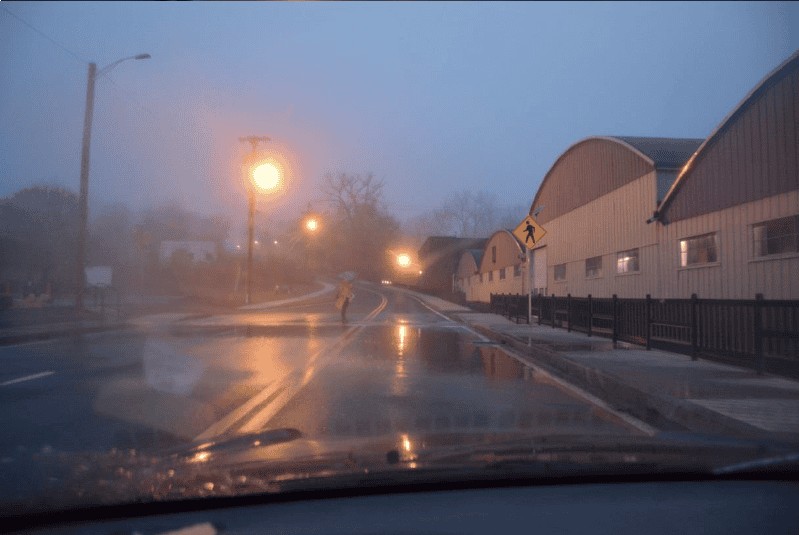
“Where was the point of perception?” “Could the pedestrian be seen by the driver?” These are a few of the many questions that will arise in a crash investigation. Accurate visibility studies, followed by a Time/Distance Analysis, can be important components in a reconstruction.
Unfortunately, often times these types of analyses are overlooked or performed without taking all factors into account to replicate the study as near to the crash as possible. Key components such as exemplar vehicles, weather, lighting, traffic, clothing, and applying the proper speeds for each involved subject, must all be carefully accounted for.
We at Beyond the Shield have the experience and detailed knowledge to recreate crash scenes. We have conducted these a multitude of times, with several prevailing as critical evidence in Superior Court criminal cases.
Contact us here to learn more.
EVENT DATA RECOVERY
An event data recorder (EDR), is sometimes referred to informally as an automotive black box. It is a device installed in some automobiles to record information related to traffic collisions. In the US, EDRs must meet federal standards, as described within the U.S. Code of Federal Regulations 49 § 563.5.
The term EDR generally refers to a simple, tamper-proof, read-write memory device. Some EDRs continuously record data, overwriting the previous few minutes until a crash stops them, and others are activated by crash-like events, such as sudden changes in velocity and may continue to record until the event is over, or until the recording time is expired. EDRs may record a wide range of data elements, potentially including whether the brakes were applied, speed at the time of impact, and steering angle.
Most EDRs in automobiles and light trucks are part of the airbag control module, which senses impact accelerations and determines what restraints to deploy. After the deployment or non-deployment decisions are made, if there is still power available, the data are written to memory. It is also possible that no data can be recovered from a data recorder.
Contact us today for further information on imaging data from an EDR.
VIDEO ANALYSIS
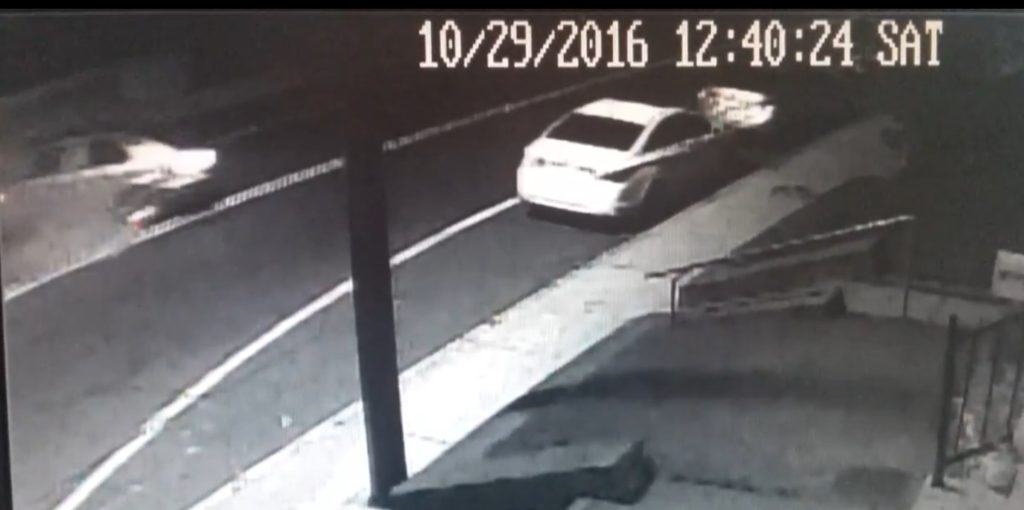
In the 21st century, we are surrounded by commercial video and surveillance systems, or personal video recordings. Many times, a crash, or parts of a collision sequence are captured on video. Some of the footage may contain useful evidence that can be enhanced or further analyzed to obtain time distance, sun positioning, vehicle speeds, pedestrian speeds, and other data that can be essential to a collision.
Visiting the scene to secure such video evidence from all possible sources is key, and time sensitive. We have experience in performing these types of video footage analysis and applying it to the event, which is essential to obtain a situationally complete reconstruction of the collision.
Contact us to discuss any video analysis of your case.
PROFESSIONAL TRAINING
At Beyond the Shield, we have decades of instructional experience. Over the past 25 years, our areas of instruction increased to include crash investigation; writing curriculum for State and Municipal academies; and continuing to serve as an adjunct instructor in forensic reconstruction & investigation related specialties for the University of North Florida – Institute of Police Technology & Management.
In 2010, we developed C.R.A.S.H. Evidence, a comprehensive course training first responding police officers, firefighters and EMS how to recognize and preserve evidence at critical crash scenes.
In 2013, we developed a course to train investigators in distracted driving investigations, which has been presented to the Governor’s Highway Safety Association, at the World Reconstruction Exposition, and numerous reconstruction conferences.
We also provide distracted driving awareness training for commercial vehicle companies; private organizations, schools and parent groups.
Contact us today to learn more about our training programs.